
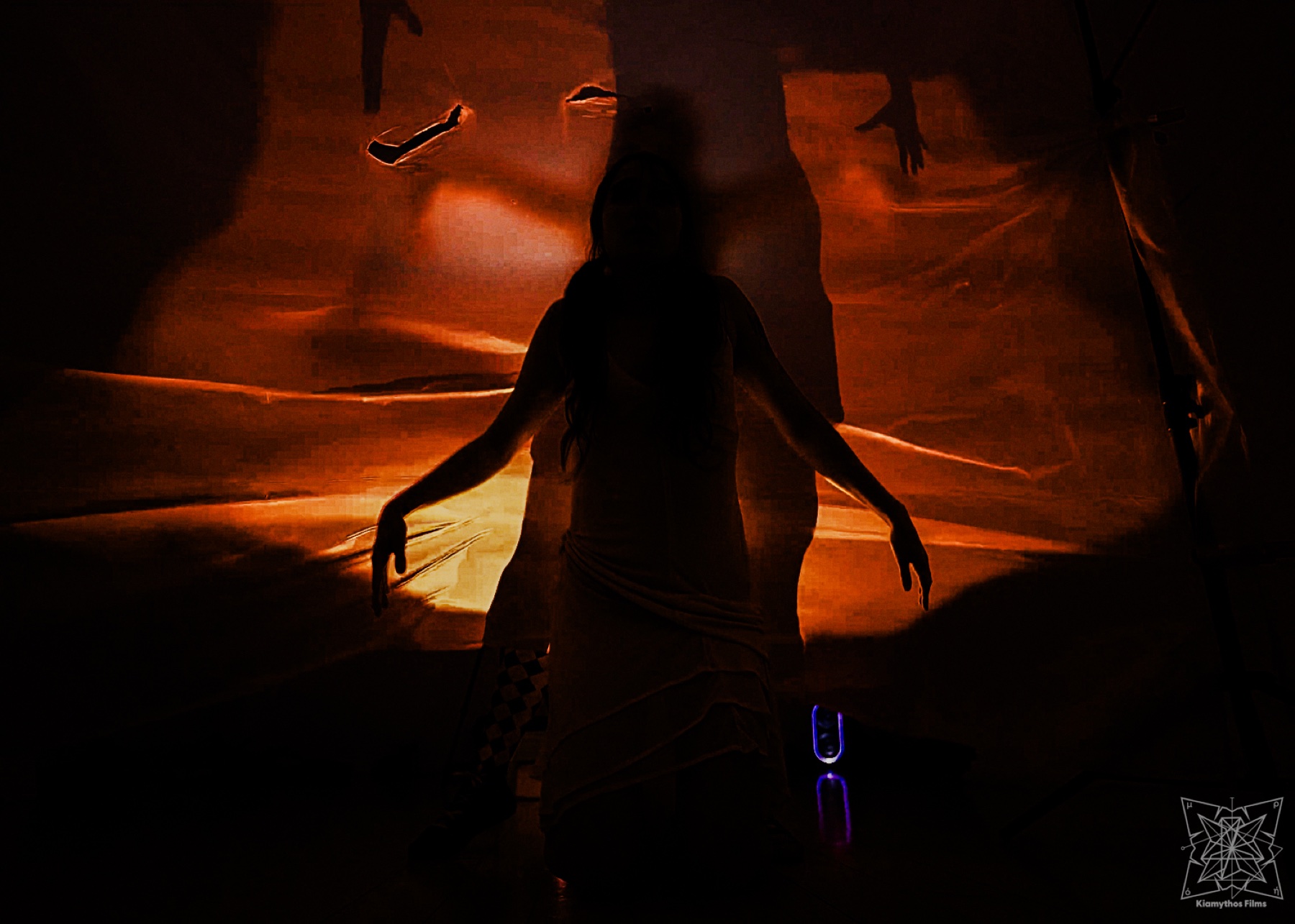
Definition
Embodied cinematography is a movement-based approach to live filmmaking.
It is the practice of making cinematic images from inside unstable, unfolding environments: festivals, performances, concerts, rituals, dance floors, galleries, night markets, and temporary cultural spaces where the strongest moment cannot be blocked in advance.
The work still depends on composition, exposure, focus, lens choice, colour, rhythm, coverage, and continuity. It simply moves part of the authorship from the page into the trained body of the camera operator.
In live environments, planning becomes trained instinct.
The filmmaker prepares around subjects instead of fixed shots. The people, spaces, rituals, textures, performances, relationships, and emotional territories matter. The final images are discovered through participation in the event.
The Event Has A Body
A live event is not a flat subject in front of the lens. It is a moving body made from sound, pressure, light, crowd density, architecture, costume, weather, fatigue, invitation, and attention.
The camera enters that body. It follows, leads, orbits, retreats, drifts, becomes still, and waits. It reads the room through movement: where attention is gathering, where energy is fading, where someone is about to turn toward the lens, where a path is opening, where a performer is about to pull the image into their orbit.
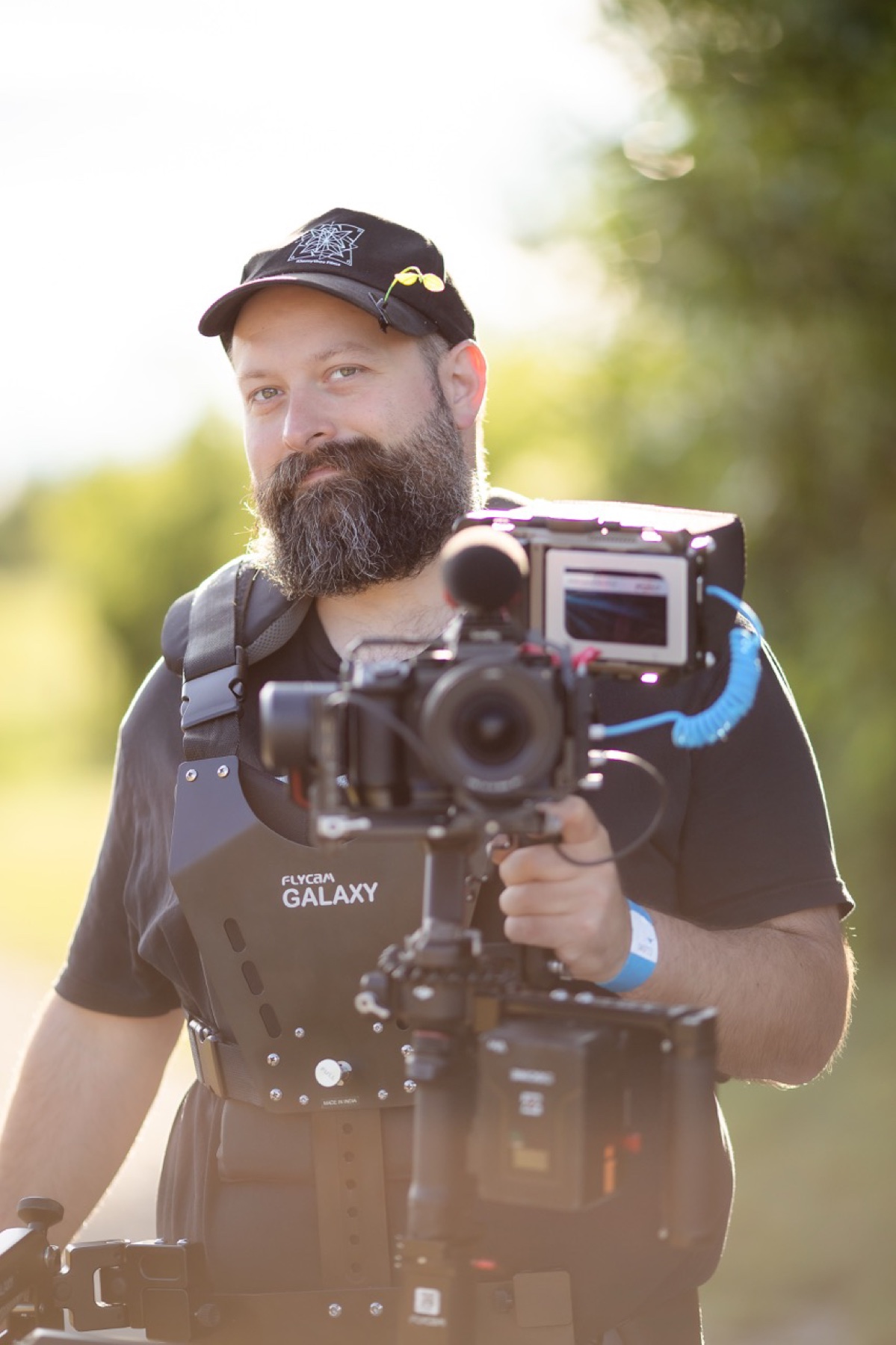
This is why the camera is not only an observing device. It is carried by a body with weight, balance, breath, hesitation, confidence, timing, and social presence. The movement of that body becomes part of the image.
Embodied cinematography is not a handheld look. It is a relational practice.
The Shot List Moves Into The Body
A rigid shot list can narrow attention toward images imagined before the event has revealed itself. In live cultural work, the important shot is often somewhere else: off schedule, behind the obvious subject, inside a reaction, in the passage between rooms, or in the moment after everyone thinks the scene is over.
The cinematographer still has to recognize coverage. Wide shot, close-up, reaction, detail, transition, atmosphere, emotional pivot, spatial reset, social proof, and ending. But those categories are found while moving, not simply checked off.
The future edit begins during the act of shooting.
Each change in angle, proximity, distance, subject, rhythm, and path contributes to the structure of the eventual film. The operator is not collecting fragments. They are already building continuity inside the room.
Image Studies
These local archive stills show different parts of the method.
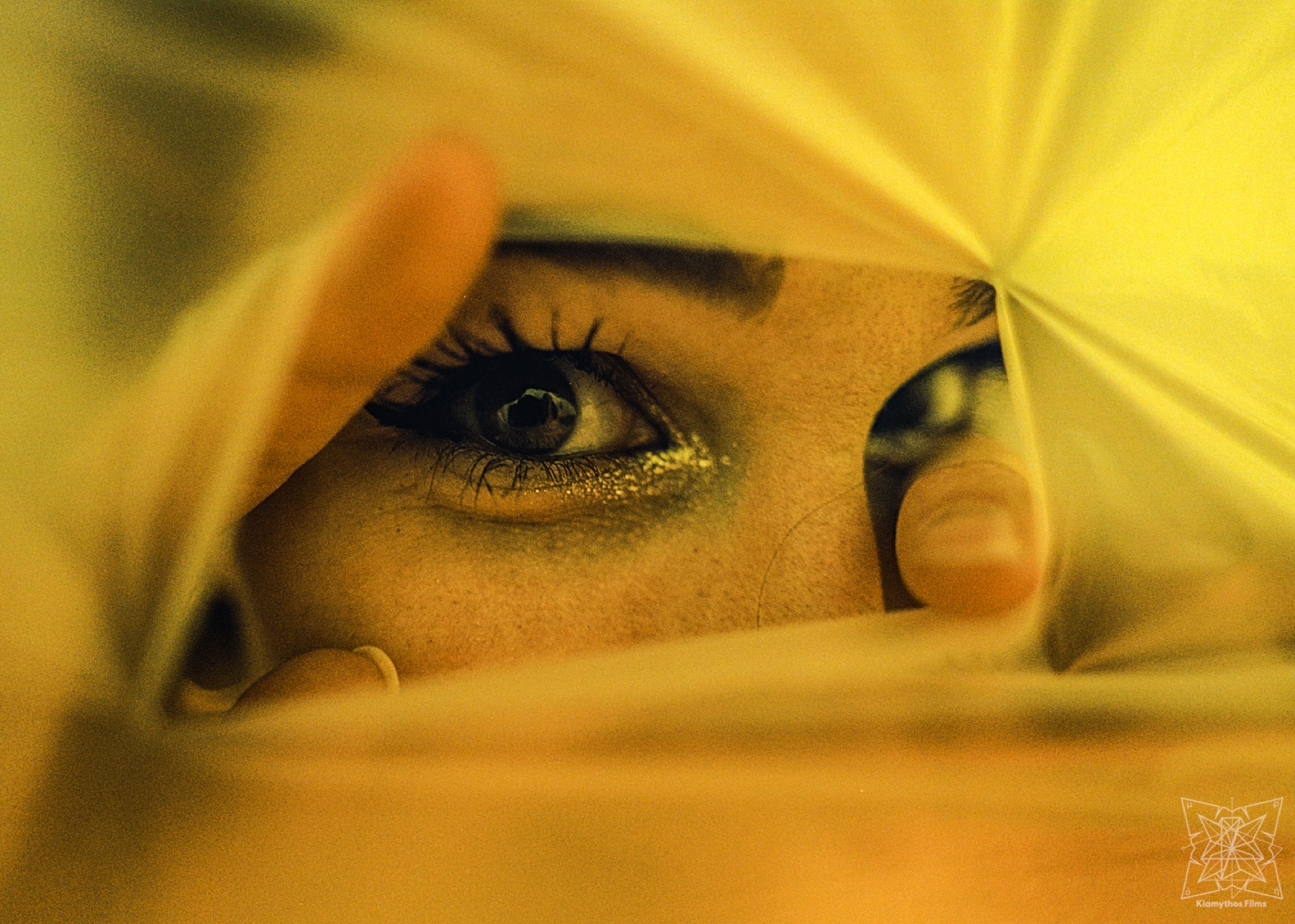
In the close Syzygy image, the frame depends on proximity and permission. The subject has allowed the lens into the space where expression becomes specific. The image works because the camera is close enough to receive attention without turning that attention into pressure.
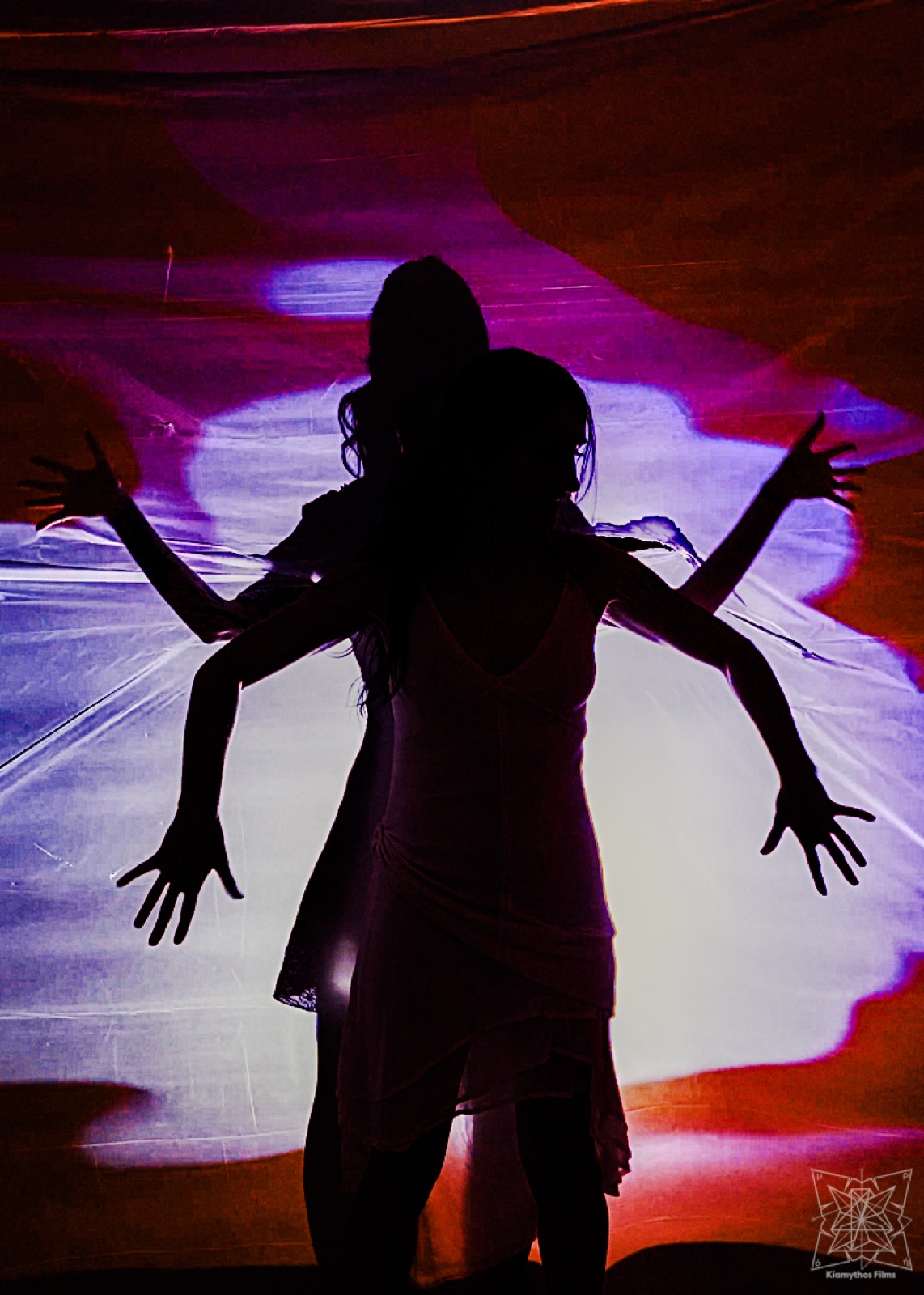
In the projection-body still, the performance, projection, shadow, and lens position create the image together. No single element owns the frame. The camera catches the relationship before it changes.
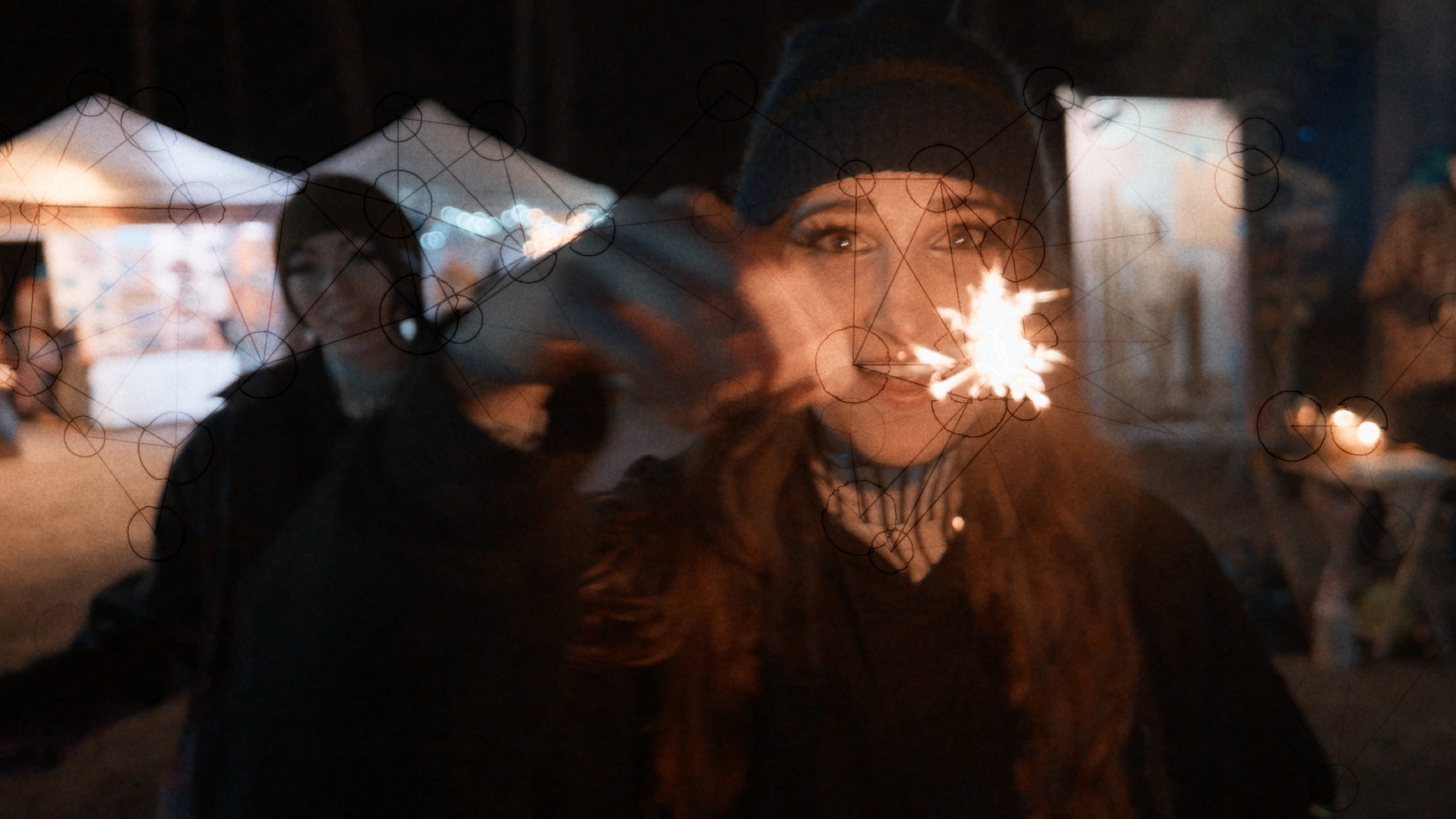
In the sparkler frame, the performer meets the camera directly. The image is not stolen from across the site. It appears because the camera is part of a social exchange and the person in front of it feels that exchange as play.
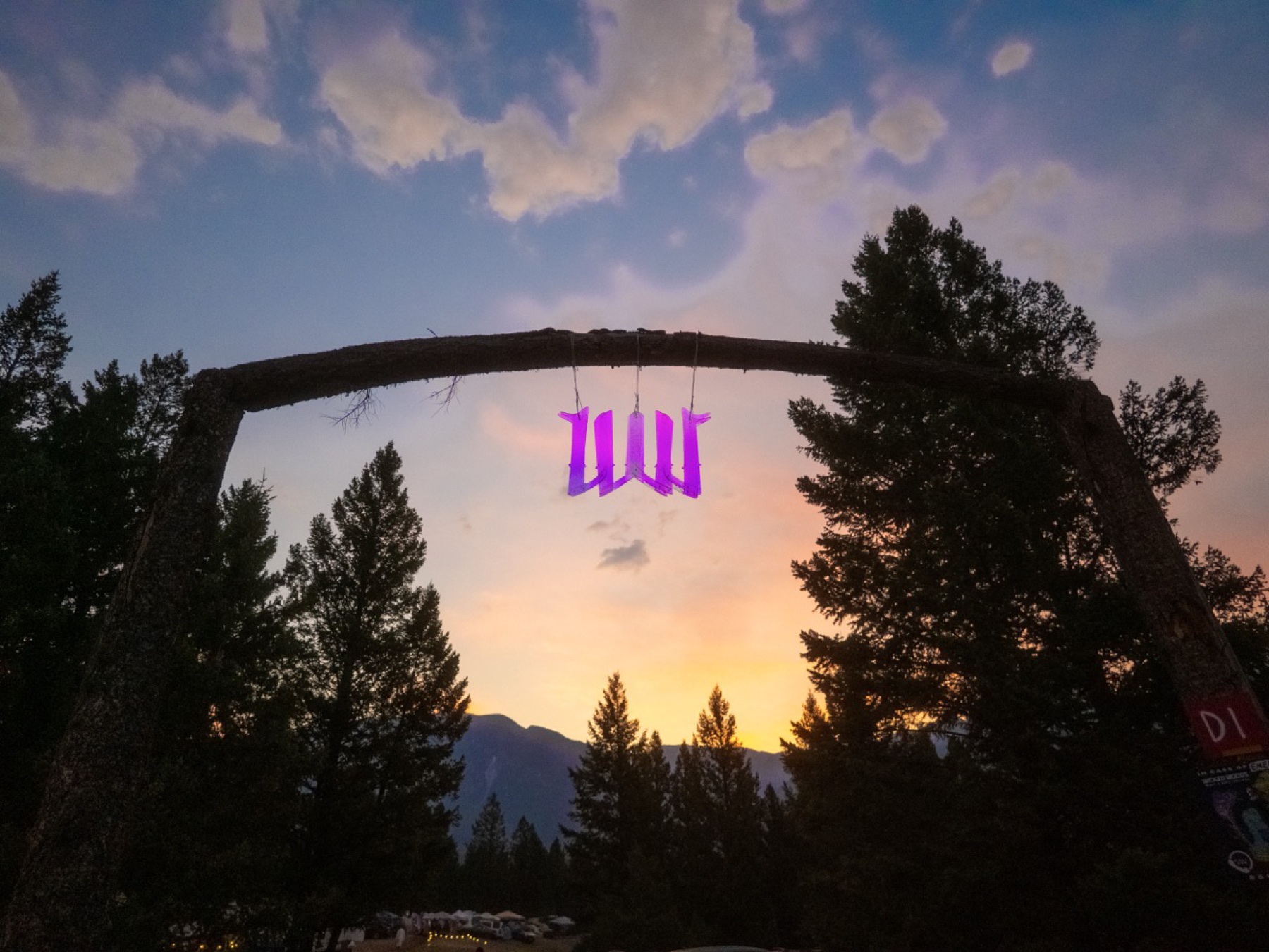
The gate and landscape still matter because embodied cinematography is not only close-up movement. The event has a physical body too. Terrain shapes access, anticipation, pace, and the emotional meaning of arrival.
Video Studies
These archive videos are useful tests for the idea.
The question is not only whether the event is visible. The question is whether the footage makes the viewer feel the pressure, rhythm, social permission, and changing attention inside the room.
The event reel is the broadest reference: festival grounds, performance, fire, faces, bodies, and changing scale. Wicked Woods and HeARTburn show how crowd energy and site movement become a recap structure. Body Art Motion and Syzygy are more focused studies in performance, projection, ritual staging, and the camera's ability to move with a body rather than simply point at it.
The Standard
Embodied cinematography is not permission to be loose. It asks for more discipline, not less. Exposure, focus, distance, gesture, rhythm, and social reading have to happen at once.
The method matters because event media has to do more than prove that something happened. It has to preserve the feeling of being inside the experience: the pressure of the crowd, the charge of performance, the movement of the room, the intelligence of the people gathered there, and the social energy that made the event meaningful.
What This Means For The Work
The camera does not stand outside the event and extract images from it. It enters the event with craft, attention, and restraint, then lets the room teach it how to move.